Comprehensive Project Report: The “Balanced Brain” Preschool Initiative
Strategic Investment for Educational Excellence and Institutional Growth (2026)
This proposal outlines a high-performance business model for launching a premier preschool franchise under the Awaken Learning philosophy. By merging the financial viability of the franchise model with our vision of “building balanced brains,” we create an institution that is both commercially profitable and socially transformative.
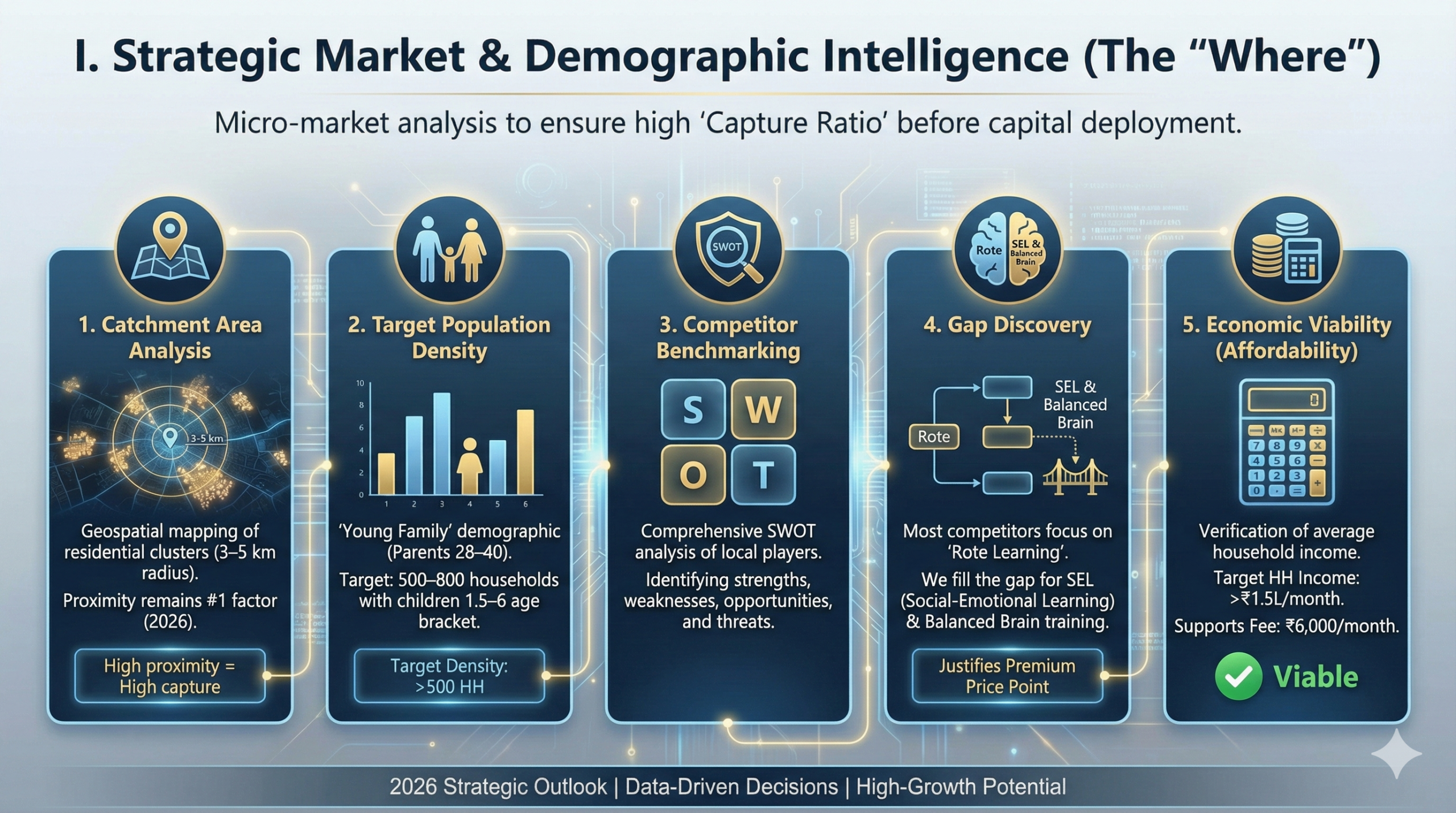
I. Strategic Market & Demographic Intelligence (The “Where”)
Before capital deployment, we conduct a granular analysis of the micro-market to ensure a high ‘Capture Ratio’ of the target audience.
Catchment Area Analysis: We utilize geospatial mapping to identify residential clusters within a 3–5 km radius. In 2026, proximity remains the #1 factor for preschool selection.
Target Population Density: Identification of the “Young Family” demographic (Parents aged 28–40). We look for a minimum density of 500–800 households with children in the 1.5–6 age bracket.
Competitor Benchmarking: A SWOT analysis of local players.
Gap Discovery: Most competitors focus on “Rote Learning.” Our project fills the gap for SEL (Social-Emotional Learning) and Balanced Brain training, justifying a premium price point.
Economic Viability (Affordability): Verification of average household income. To support a fee of ₹6,000/month, the target household income should ideally exceed ₹1.5L/month.
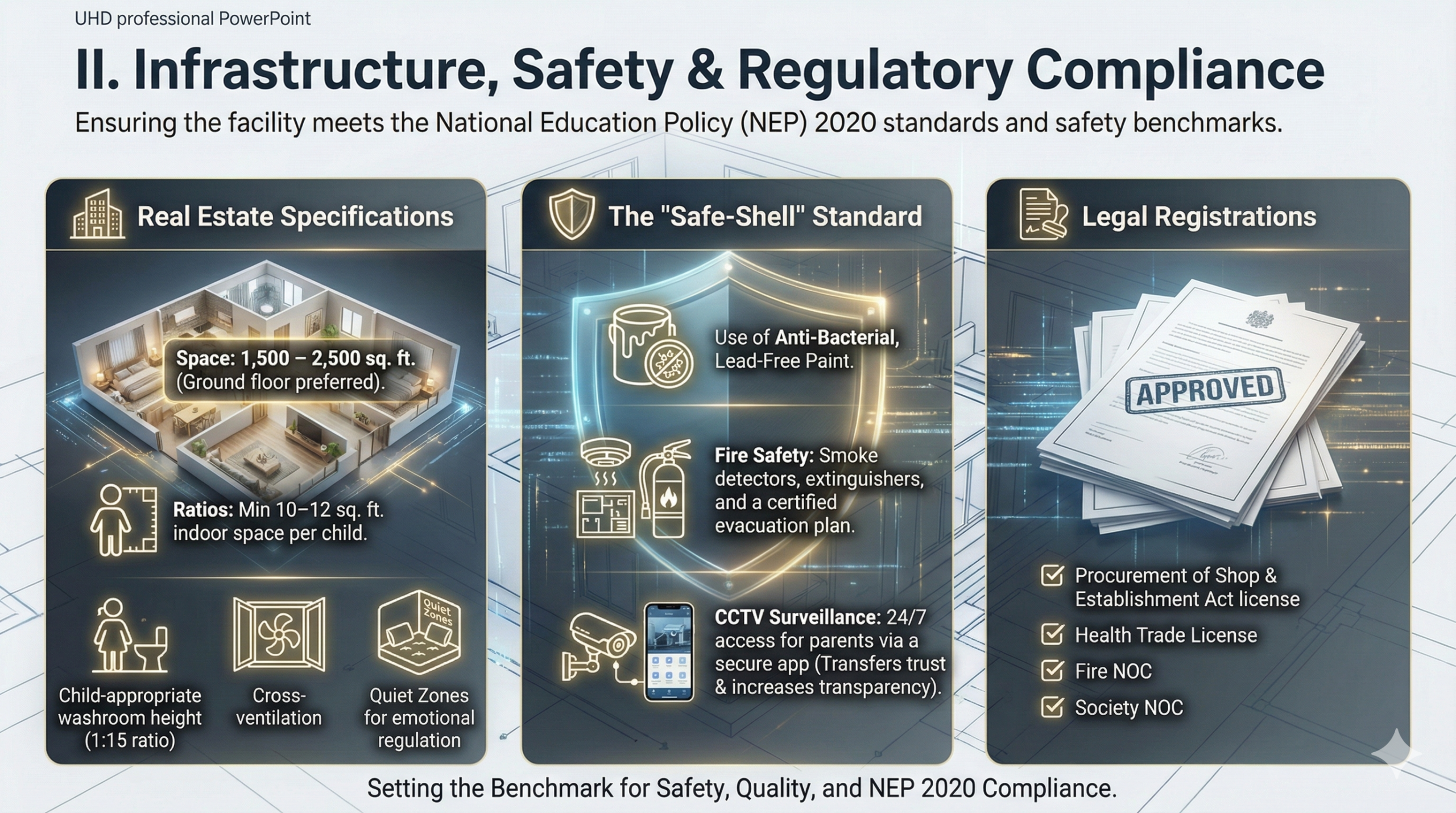
II. Infrastructure, Safety & Regulatory Compliance
Ensuring the facility meets the National Education Policy (NEP) 2020 standards and safety benchmarks.
Real Estate Specifications:
Space: 1,500 – 2,500 sq. ft. (Ground floor preferred).
Ratios: Minimum of 10–12 sq. ft. of indoor space per child.
Amenities: Child-appropriate washroom height (1:15 ratio), cross-ventilation, and dedicated “Quiet Zones” for emotional regulation.
The “Safe-Shell” Standard: * Use of Anti-Bacterial, Lead-Free Paint.
Fire Safety: Smoke detectors, extinguishers, and a certified evacuation plan.
CCTV Surveillance: 24/7 access for parents via a secure app (Transfers trust and increases transparency).
Legal Registrations: Procurement of Shop & Establishment Act license, Health Trade License, Fire NOC, and Society NOC.
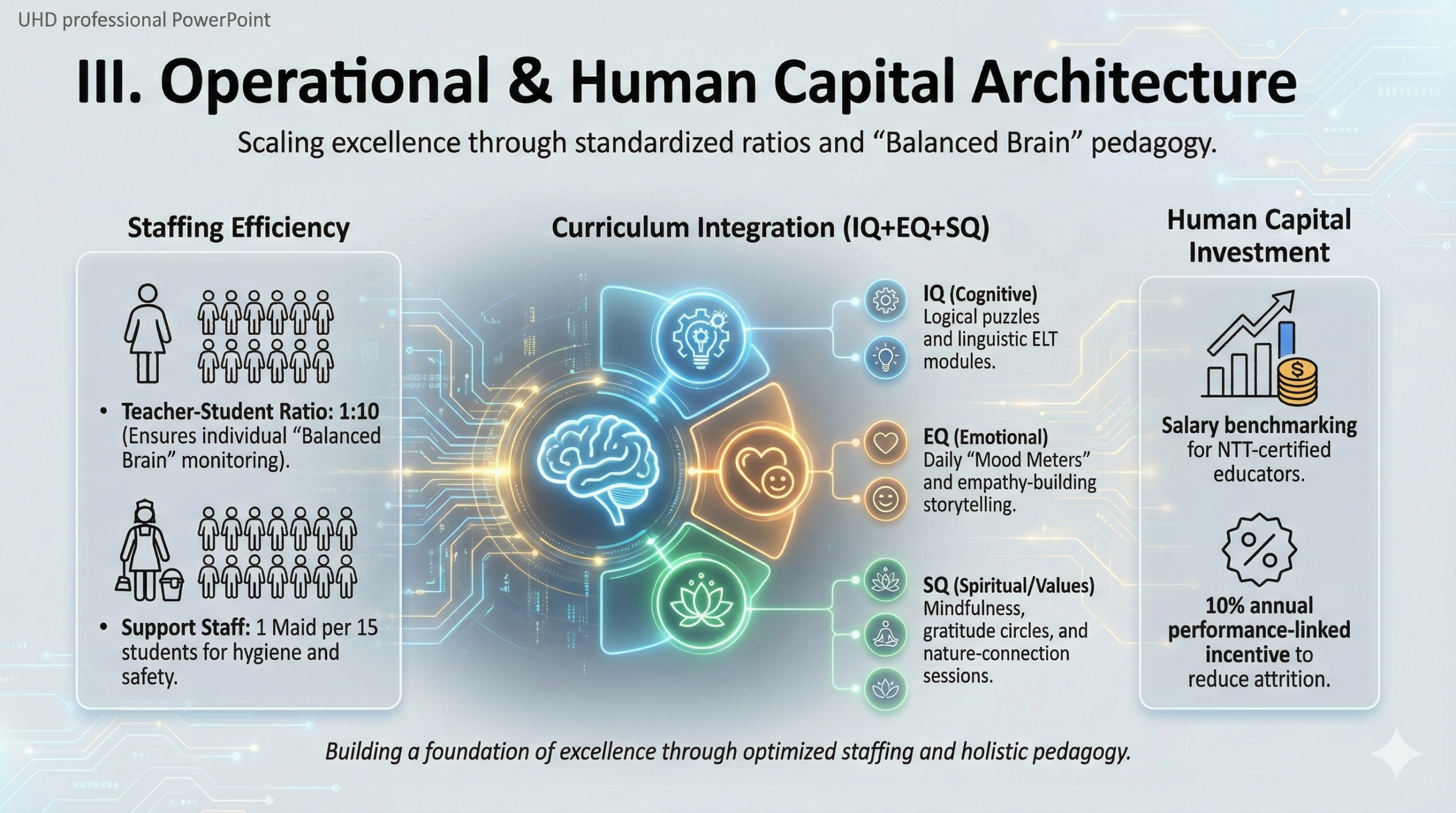
III. Operational & Human Capital Architecture
Scaling excellence through standardized ratios and “Balanced Brain” pedagogy.
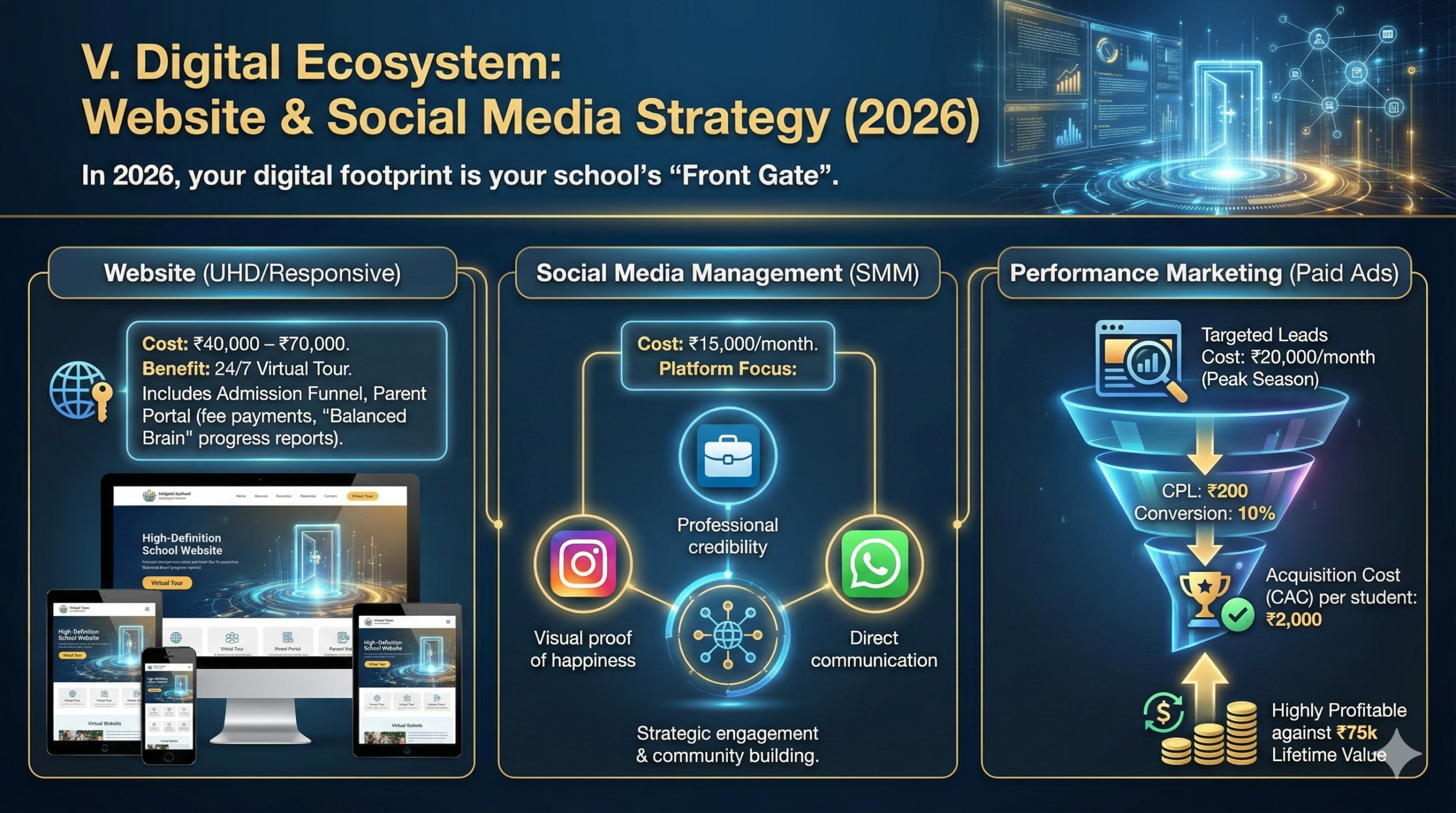
Benefit: Targeted leads. If Cost per Lead (CPL) is ₹200 and conversion is 10%, your Acquisition Cost (CAC) per student is ₹2,000—highly profitable against a ₹75k lifetime value.
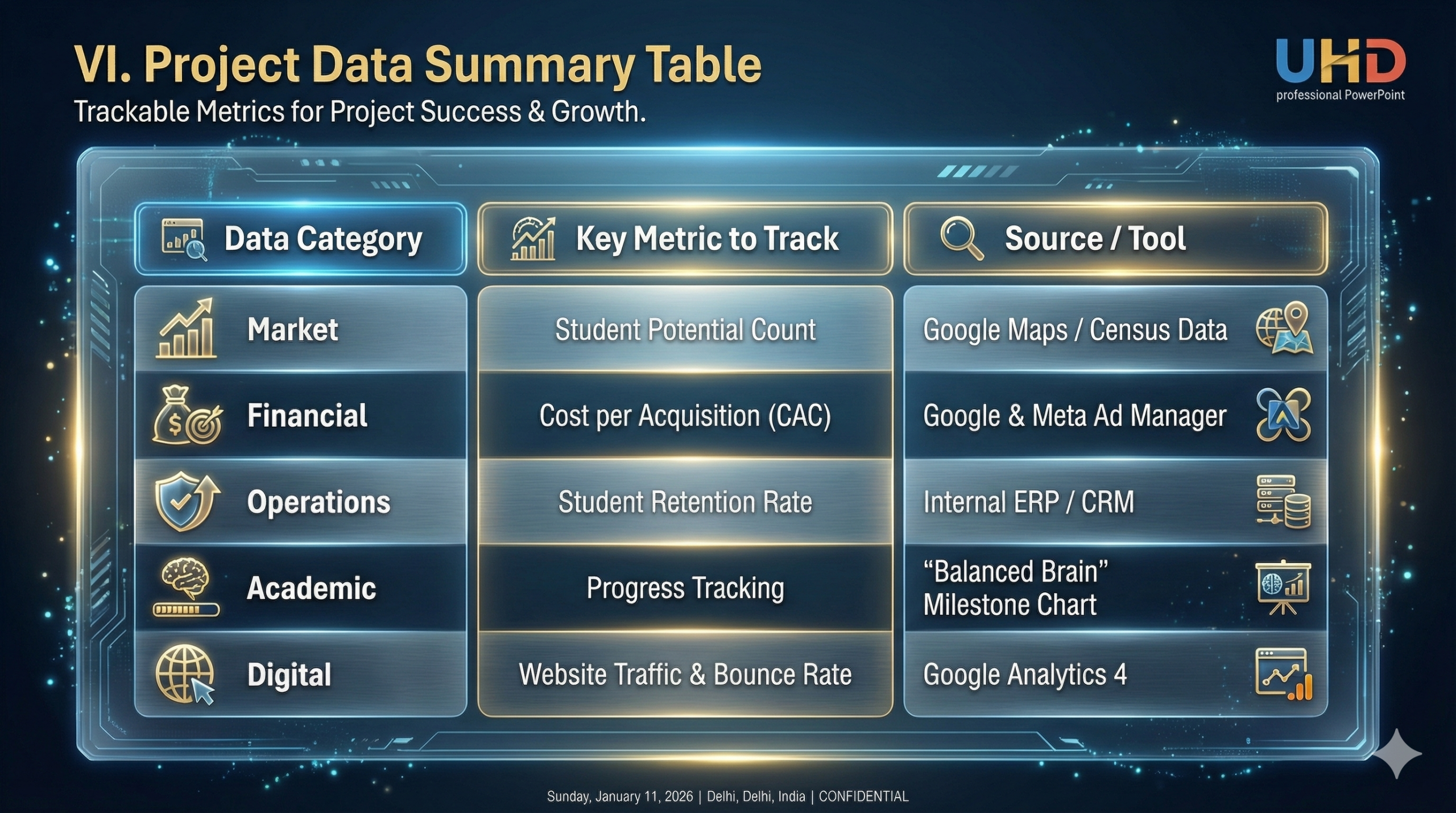
VI. Project Data Summary Table
Data Category
Key Metric to Track
Source / Tool
Market
Student Potential Count
Google Maps / Census Data
Financial
Cost per Acquisition (CAC)
Google & Meta Ad Manager
Operations
Student Retention Rate
Internal ERP / CRM
Academic
Progress Tracking
“Balanced Brain” Milestone Chart
Digital
Website Traffic & Bounce Rate
Google Analytics 4
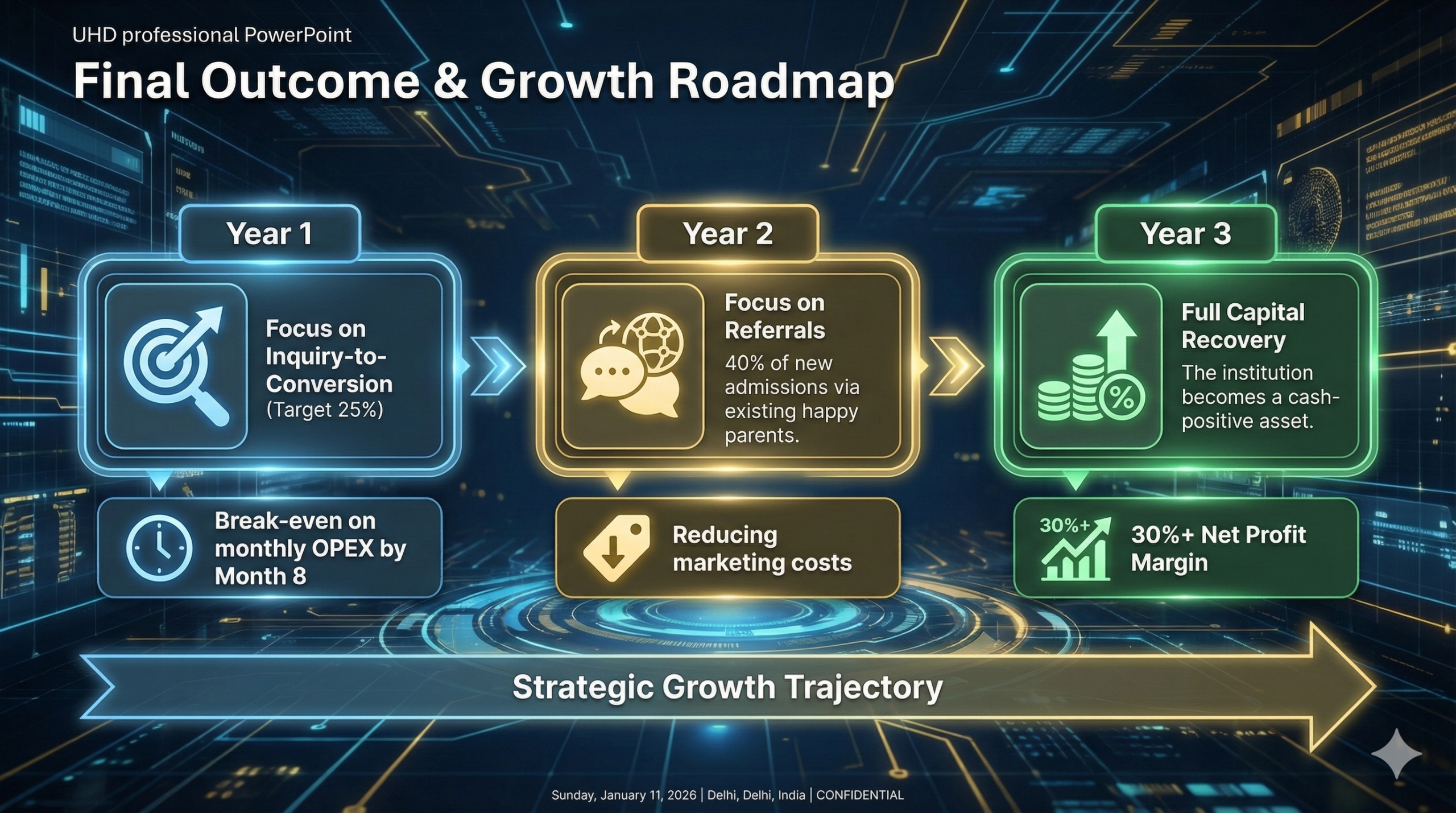
Final Outcome & Growth Roadmap
Year 1: Focus on Inquiry-to-Conversion (Target 25%). Break-even on monthly OPEX by Month 8.
Year 2: Focus on Referrals. 40% of new admissions should come via existing happy parents, reducing marketing costs.
Year 3: Full Capital Recovery. The institution becomes a cash-positive asset with a 30%+ Net Profit Margin.